Thursday, October 29, 2009

Supreme Court Should Apply Roper Reasoning to Upcoming Juvenile Life-Without-Parole Cases


Supreme Court Should Apply Roper Reasoning to Upcoming Juvenile Life-Without-Parole Cases


By Charles Ogletree

The United States Supreme Court will hold oral arguments on November 9 in two cases, Sullivan v. Florida and Graham v. Florida, which will determine whether it is cruel and unusual punishment under the Eighth Amendment to sentence an adolescent who committed a non-homicide offense to life in prison with no opportunity for release.

Petitioners Joe Sullivan and Terrance Graham were both sentenced to life imprisonment without parole for offenses that did not involve homicide in Florida. Sullivan was 13 years old when he was sentenced to spend the remainder of his natural life in prison. Graham received life without parole for a parole violation at 17 years old. He was sentenced without a trial.

Sullivan and Graham present an opportunity for the Court to affirm the reasoning put forth in Roper v. Simmons, which struck down capital punishment for juveniles. Roper established what every parent knows and what science confirms: adolescents are fundamentally different from adults in maturity and judgment.

The extensive body of research on adolescent development proves that adolescents have not reached the level of mental or emotional development that allows adults to make mature decisions, think through consequences, and control their impulses. This same developmental immaturity also makes adolescents the strongest candidates for rehabilitation as they grow older.
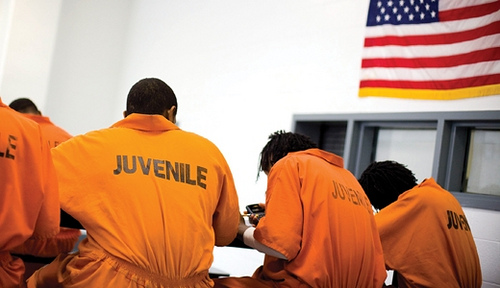
In Roper, the Court asserted that these significant developmental differences have direct bearing on the culpability of adolescents. The Court ruled that their immature judgment, impulsive decision-making, vulnerability to peer pressure, and inherent potential for rehabilitation reduce culpability such that sentencing them to death violates the Eighth Amendment.

These principles should be applied to the constitutionality of juvenile life-without-parole sentencing. The same transient qualities of adolescence that the Court relied upon in Roper make it similarly inappropriate to subject a teenager to a permanent punishment of life in prison without parole. It is cruel and inaccurate, as the Court has recognized, to pass a final and irreversible judgment on a person whose character is still forming and undergoing significant changes.

Every state acknowledges this relative immaturity of adolescents through civil laws mandating their differential treatment. States restrict adolescents from a wide range of activities that require more mature judgment, such as voting, driving, and consenting to sexual activity. In Florida, the State even restricts the age at which adolescents are allowed to get tattoos, operate golf carts, or attend professional boxing matches. Yet when it comes to criminal sanctions - such as those imposed on Sullivan and Graham - the State disregards this reasoning that young people are indeed categorically different.

The extreme rarity of the punishment shows that it is widely rejected by American society. Only six states are known to imprison juveniles for life without parole in non-homicide offenses. It has been eighteen years since any state sentenced a 13 year old to life without parole for a non-homicide offense. Sullivan is one of only two people in the entire country serving such a sentence. The total number of 13 and 14 year olds sentenced to life without parole for any offense over the last thirty years is 73. Florida is the only state nationwide with a first-time juvenile offender serving life without parole for armed burglary (Graham's offense). This kind of national repudiation has been recognized by the Court as a characteristic of cruel and unusual punishment prohibited by the Eighth Amendment. It should similarly be applied here.

Although not at issue before the Court, there is an appallingly disturbing component to these juvenile life-without-parole cases. Adolescents subjected to this punishment are disproportionately children of color. In fact, every single young person sentenced to life without parole for a non-homicide offense is a racial minority.

It is my hope that the Court follows its logic in Roper and acknowledges that these punishments must be tempered by an understanding that young people are categorically different in maturity and culpability.

Life-without-parole sentences were designed to deal with the most dangerous offenders who are beyond the pale of rehabilitation. Science, the Court's own precedents, and common sense all teach us that adolescents cannot reliably be categorized among the worst adult offenders. The Court ought to do away with this cruel and inappropriate sentence.

Charles Ogletree is Jesse Climenko Professor of Law & Director of the Charles Hamilton Houston Institute for Race and Justice at Harvard Law School. Ogletree submitted an Amicus brief in support of Petitioners with the NAACP Legal Defense & Educational Fund and the National Association of Criminal Defense Lawyers.

Source: http://www.acslaw.org/node/14555

Wednesday, October 28, 2009

"Giving Child Offenders a Chance" by Linda L. White

washingtonpost.com

Giving child offenders a chance

Wednesday, October 28, 2009

I was deeply moved by former senator Alan K. Simpson's Oct. 23 Washington Forum commentary, "A sentence too cruel for children," although I might be an unexpected person to be so moved. Twenty-three years ago, my daughter, then pregnant, was murdered by two 15-year-old boys. But in the years since her death, I have come to believe that sentencing teenagers to life in prison without the possibility of parole does not serve victims, offenders or public safety.

There is no reason to deny child offenders the opportunity to have their sentences reviewed after they have served a significant amount of time to see whether they have changed and matured. Only those who have demonstrated their growth and proved they are rehabilitated would be considered for parole. As Mr. Simpson's personal story shows, the potential for growth is enormous.

My family experienced unimaginable loss, but I still believe that young people -- even those who have done terrible things -- can be reformed. A permanent sentence should not be imposed on children whose characters are still forming.

And thank you to the senator for his candor in writing on this issue. His courage has served to strengthen my resolve to keep speaking out on this important matter.

Linda L. White, Magnolia, Tex.

The writer was among the signers of a friend-of-the-court brief in Sullivan v. Florida and Graham v. Florida, the two Supreme Court cases regarding the sentencing of juveniles.

Friday, October 23, 2009

"A Sentence Too Cruel for Children" by Alan Simpson


A Sentence Too Cruel for Children

by Alan Simpson
The Miami Herald
Friday, October 23, 2009

Rather than serving in the U.S. Senate for almost 20 years, or having so many other wonderful life experiences, I could have served a longer sentence in prison for some of the stupid, reckless things I did as a teenager. I am grateful to have gotten a second chance -- and I believe our society should make a sustained investment in offering second chances to our youth.

When I was a teen, we rode aimlessly around town, shot things up, started fires and generally raised hell. It was only dumb luck that we never really hurt anyone. At 17, I was caught destroying federal property and was put on probation. For two years, my probation officer visited me and my friends at home, in the pool hall, at school and on the basketball court. He was a wonderful guy who listened and really cared. I did pretty well on probation. At 21, though, I got into a fight in a tough part of town and ended up in jail for hitting a police officer.

I spent only one night in jail, but that was enough. I remember thinking, ``I don't need too much more of this.''

I had a chance to turn my life around, and I took it. This term, the U.S. Supreme Court will decide whether other young people get that same chance.

On Nov. 9, the court will hold oral argument in Sullivan v. Florida and Graham v. Florida, two cases that will determine whether it is constitutional to sentence a teenager to life in prison without parole for a crime that did not involve the taking of a life. There is a simple reason the criminal justice system should treat juveniles and adults differently: Kids are a helluva lot dumber than adults. They do stupid things -- as I did -- and some even commit serious crimes, but youths don't really ever think through the consequences. It's for this reason that every state restricts children from such consequential actions as voting, serving on juries, purchasing alcohol or marrying without parental consent.

The Supreme Court recognized the differences between teenagers and adults when it held a few years ago, in Roper v. Simmons, that it was unconstitutional to impose the death penalty on defendants younger than 18. Locking up a youth for the rest of his life, with no hope for parole, is surely unconstitutional for the same reasons. The person you are at 13 or 17 is not the person you are at 30, 40 or 50. Everyone old enough to look back on his or her teenage years knows this.

Peer pressure is a huge part of youth behavior, whether one grows up in Washington, D.C., or Cody, Wyo. The guys will say, ``Go get the gun. We'll pick up just enough money for tonight.'' And almost unthinkingly, you'll do it. There is simply no way to know at the time of sentencing whether a young person will turn out ``good'' or ``bad.'' The only option is to bring him or her before a parole board -- after some number of years -- and give the person the chance to declare, ``I'm a different person today'' -- and then prove it.

Parole boards can examine how youth offenders spent their time in prison. Did they read books or work in the library? Did they make furniture? Get a college degree? Those are critical questions for review.
If at that review a parole board finds out that a miscreant hasn't changed, then keep him or her in prison. But some juvenile offenders make real efforts while they are in jail, and we should make honest adjustments for them.

We all know youths who have changed for the better. When I was a lawyer in Cody, the court sometimes appointed me to represent juvenile offenders, and parents who knew of my history often asked for help with their children. I once handled the case of an 18-year-old who stole a car and drove it to Seattle. I later hired him as chief of staff for my Senate office, and he turned out to be one of the most able of the people I put in that job.

I was lucky that the bullets I stole from a hardware store as a teenager and fired from my .22-caliber rifle never struck anyone. I was fortunate that the fires I set never hurt anyone. I heard my wake-up call and listened -- and I went on to have many opportunities to serve my country and my community.

When a young person is sent ``up the river,'' we need to remember that all rivers can change course.

Alan Simpson, a Republican, was a U.S. senator from Wyoming from 1977 to 1996. He is among former juvenile offenders who have submitted a friend-of-the-court brief in support of the petitioners in Sullivan v. Florida and Graham v. Florida.

Source: http://www.miamiherald.com/opinion/inbox/story/1296814.html

Saturday, October 17, 2009

"Second Chances" by Raphael B. Johnson

Second Chances

by Raphael B. Johnson
Newsweek
October 16, 2009

At 17 I was captain of my high-school football team and on my way to college. But in November 1992 I went to a birthday party with friends. We were tussling around, and the chaperones threw us out. One of them knocked me to the ground, and I felt ashamed and angry. My friend had a gun in his car. I got it, came back, and fired three shots, killing one of the chaperones. I was convicted of murder and given 10 to 25 years in prison.

http://www.michigancitizen.com/clients/michigancitizen/5-30-2009-12-09-50-AM-7984978.Raphael-BJLWOL.gifI grew up in an area known for gun violence and drugs. Like a lot of boys, I looked up to tough men who could fight and had been in prison. My first arrest came when I was 12: I stole my grandmother's gun and took it to school. At 14 I was sent to a boys' home. I studied hard and won a full scholarship to attend the University of Detroit high school. I excelled there, but my thinking was twisted. I didn't know how to manage my anger. As a result, a man lost his life the night of that party.

On the day I was to begin Marygrove College, I started a prison term instead. I was 18 and had hope: I could be paroled when I was still a relatively young man. I spent six of my 12 years in prison in solitary confinement. I promised myself I would read 1,000 books. I read 1,300. I became certified as a carpenter, plumber, electrician, and paralegal.

I was released from prison in 2004 after my third parole hearing. I received bachelor's and master's degrees from University of Detroit Mercy. I started a motivational-speaking and fitness-training company. As a community-reintegration coordinator, I help other ex-offenders start anew. I'm proof that people, especially teens, can't be judged by the worst thing they ever did.

There are countless examples of former juvenile offenders like myself who, given the opportunity to be contributing members of society, have done great things. Former senator Alan Simpson committed a serious federal offense as a juvenile (destroying government property) but became a GOP leader. Terry Ray was a violent repeat offender but became an assistant U.S. attorney. Charles Dutton was convicted of manslaughter at 17 but became a respected actor and director. Dozens of studies show that overwhelming majorities of juvenile offenders mature out of committing crimes.

Next month the Supreme Court will hear oral arguments in Sullivan v. Florida and Graham v. Florida, two cases that will decide if it's constitutional to sentence teens to life in prison without parole. The court should give people like me a reason to keep improving themselves. Individuals who have committed crimes as teens should be allowed to have their sentences reviewed. Teenagers change. Adolescents, even more than adults, have enormous capacity for redemption. I know.

Johnson recently won a primary election for the Detroit city council.

Source: http://www.newsweek.com/id/218110

Below is Raphael's acceptance speech for being awarded Community Organizer of the Year at the 2008 Steve Harvey Hoodie Awards. The Hoodie Awards honors local business establishments, community leaders, churches and high schools nation wide for their contributions and excellence in the community. The event was held on September 20, 2008 at the Orleans Arena in Las Vegas, NV.

Monday, September 28, 2009

U.S. Supreme Court to Consider Juvenile 'Lifers'


by David G. Savage

September 28, 2009

Reporting from Washington - Joe Sullivan was 13 years old when he and two older boys broke into a home, where they robbed and raped an elderly woman. After a one-day trial in 1989, Sullivan was sentenced to life in prison with no chance for parole.

Terrance Graham was 16 when he and two others robbed a restaurant. When he was arrested again a year later for a home break-in, a Florida judge said he was incorrigible. In 2005, Graham received a life term with no parole.

The two young convicts represent an American phenomenon, one the Supreme Court is set to reconsider in the fall term that opens Oct. 5. At issue is whether it is cruel and unusual punishment to imprison a minor until he or she dies when the crime does not involve murder.

According to Amnesty International, "The United States is the only country in the world that does not comply with the norm against imposing life-without-parole sentences on juveniles."

Nearly all of the estimated 2,500 U.S. prisoners serving life terms for juvenile crimes, the group said, were guilty either of murder or of participating in a crime that led to a homicide. But 109 inmates are serving life sentences for other crimes committed when they were younger than 18.

Sullivan's and Graham's lawyers do not claim the young men deserve to go free.

"We are not asking for Mr. Graham to be released any time soon," attorney Bryan Gowdy said. "We are asking the court to declare unconstitutional a sentence of life without parole for these crimes. It would be entirely different if Mr. Graham had a meaningful opportunity for parole."

The question will be an early test of whether Justice Sonia Sotomayor, a former prosecutor, will align herself with the court's tough-on-crime conservatives or join with its liberals to strike down prison policies perceived as going too far.

Sullivan’s and Graham’s cases will be heard in November. Many lawyers and prosecutors said that until the Supreme Court agreed this year to take up the issue, they were unaware of juveniles receiving such sentences.

Sullivan, now 33, has been in prison for 20 years. The Florida appeals court and the state Supreme Court refused to review his sentence. When his case reached the U.S. Supreme Court, Florida Atty. Gen. Bill McCollum said the appeal should be dismissed on the grounds that it was too late to raise the issue of cruel and unusual punishment.

A lawyer for Graham has called his client's life sentence freakish and unfair. A second youth who participated in the restaurant robbery hit an employee with a club. He was later arrested for robbing a gas station and sentenced to three years in prison. He has since been released.

Florida leads the nation in sending teenagers to prison for life with no possible parole for crimes such as burglary, assault or rape. It has at least 77 such inmates. California and six other states also have at least one.

"This is a hidden group. They don't get a lot of attention because there was no homicide," said Paolo Annino, a law professor at Florida State University who has compiled national data on these prisoners.

California officials said they were unaware of having four such inmates until they checked their database at Annino's request. Two years ago, California joined many other states in prohibiting the sentencing of young offenders to life in prison.

But that measure did not affect inmates who had already been sentenced.

Annino and others point to two trends in the 1980s that led to juveniles serving life terms. First was the national move to abolish parole, reflecting fears that violent criminals could not be safely released. Second was the increased prosecution of young criminals as adults.

In defense of its life-in-prison policy, Florida's lawyers have pointed to several deadly attacks on European visitors carried out by young criminals.

These violent incidents were "threatening the state's bedrock tourism industry," Florida's lawyers said in the opening paragraph of their brief to the Supreme Court in the Graham case.

david.savage@latimes.com

Source: http://www.latimes.com/news/nationworld/nation/la-na-court-preview28-2009sep28,0,1454652.story

Sunday, September 27, 2009

Amicus Briefs in Pending Juvenile Life Without Parole U.S. Supreme Court Cases

The following are merit briefs and all the amicus briefs that were filed in the cases Graham v. Florida, Docket No. 08-7412 and Sullivan v. Florida, Docket No. 08-7621, currently being considered by the U.S. Supreme Court.

In the Graham case the U.S. Supreme Court will consider the question, "Whether the Eighth Amendment's ban on cruel and unusual punishments prohibits the imprisonment of a juvenile for life without the possibility of parole as punishment for the juvenile's commission of a non-homicide."

In the Sullivan case the U.S. Supreme Court will consider the following two questions, "Joe Sullivan is serving a sentence of life imprisonment without the possibility of parole for a non-homicide offense committed when he was thirteen years old. Nationwide, only one other thirteen-year-old child has received a life-without-parole sentence for a non-homicide. The questions presented are:

1. Does imposition of a life-without-parole sentence on a thirteen-year-old for a non-homicide violate the prohibition on cruel and unusual punishments under the Eighth and Fourteenth Amendments, where the freakishly rare imposition of such a sentence reflects a national consensus on the reduced criminal culpability of children?

2. Given the extreme rarity of a life imprisonment without parole sentence imposed on a 13-year-old child for a non-homicide and the unavailability of substantive review in any other federal court, should this Court grant review of a recently evolved Eighth Amendment claim where the state court has refused to do so?"

Graham v. Florida, Docket No. 08-7412

Merit briefs
Amicus briefs

Sullivan v. Florida Docket No. 08-7621

Merit briefs

Amicus briefs
Source: http://www.abanet.org/publiced/preview/briefs/nov09.shtml

Wednesday, September 16, 2009

Mental Health America Adopts Policy Opposing Life Sentences Without Parole For Juveniles

 LOGO

Mental Health America Adopts Policy Opposing Life Sentences Without Parole For Juveniles

Contact: Steve Vetzner, (703) 797-2588 or svetzner@mentalhealthamerica.net

ALEXANDRIA, Va. (September 16, 2009)-Mental Health America has adopted a strong policy opposing sentences of life without parole for juvenile offenders, calling such punishment "inconsistent with any of the purposes which ordinarily guide sentencing."

The policy was adopted by Mental Health America's Board of Directors at its September meeting. The U.S. Supreme Court will consider whether such sentences are cruel and unusual punishment this term.

The United States is one of the few countries in the world that sentences juveniles to life without parole. In 42 states and under federal law, children who are too young to legally buy cigarettes are being tried for crimes as adults and if convicted can be sentenced to life without the possibility of parole.

There are currently at least 2,500 youthful offenders serving life without parole in U.S. prisons. Nationally, 59 percent of these individuals received their sentences for their first ever criminal conviction. Sixteen percent were between the ages of 13 and 15 when they committed their crimes, and 26% were sentenced under a felony murder charge where their offense did not involved carrying a weapon or pulling a trigger.

"Sentencing, including sentencing to imprisonment, has long been guided by four considerations: deterrence, retribution, incapacitation and rehabilitation. None of these purposes are served by sentencing juveniles to life without parole," the policy position states.

"Victims of child abuse and neglect are over-represented among incarcerated juveniles, including those serving life without parole. Studies of this population also consistently demonstrate a high incidence of mental health and substance use disorders, serious brain injuries, and learning disabilities. In many instances, these juveniles have not received adequate diagnostic assessments or interventions."

The policy also notes that such sentences violate international law and the Convention of the Rights of the Child, which has been ratified by every country in the world, except Somalia and the United States.

Mental Health America is also encouraging its more than 300 affiliates to work to repeal laws in those states which permit a sentence of life without parole. And it urges mental health advocates, professionals and other service providers work to ensure that juveniles are provided with appropriate services while incarcerated whose goal is to identify and ameliorate those problems which may have led to the crime and which need to be addressed before release will be safe and appropriate.

Celebrating 100 years of mental health education and advocacy, Mental Health America is the country's leading nonprofit dedicated to helping all people live mentally healthier lives. With our more than 300 affiliates nationwide, we represent a growing movement of Americans who promote mental wellness for the health and well-being of the nation-every day and in times of crisis. In 2009, we are marking a century of achievement with a year-long Centennial Observance: "Celebrating the Legacy, Forging the Future."

###

Source: http://www.mentalhealthamerica.net/index.cfm?objectid=C354FC1C-1372-4D20-C8ED5DA84C977A6A

Monday, September 14, 2009

Mich. to Rethink Teen Life Sentence

House committee considers bills amid 'emotional testimony'

by Karen Bouffard
Detroit News Lansing Bureau
Monday, September 14, 2009

Lansing -- Michigan is among a growing number of states reconsidering whether juveniles should be sentenced to life behind bars with no chance of parole.

The trend has been spurred by scientific evidence that shows teens' brains are not fully developed, leaving them vulnerable to impulsive actions and poor choices.

Teens can be sentenced to mandatory life in prison without parole in most states. But Colorado, Kansas, Kentucky, New Mexico, Oregon and Texas have outlawed such sentences.

The Michigan House Judiciary Committee is considering bills that would allow those serving such sentences to be considered for parole, or ban such sentences. Two hearings have been held so far, and the committee plans to propose a package of bills addressing the issue later this fall, according to Rep. Mark Meadows, D-East Lansing, the committee chairman.

"It was very emotional testimony -- we had victims' families testify, prosecutors testify, relatives of children in prison testify," Meadows said.

Citing scientific evidence about teens' brain development, the U.S. Supreme Court ruled in 2005 that the sentencing of people to death for crimes they commit before age 18 is unconstitutional.

Child advocates have seized upon that ruling as a basis to challenge mandatory life sentences for teens, and the Supreme Court is poised to hear two such cases in November.

That argument doesn't hold water with Charles D. Stimson, a senior legal fellow with the Heritage Foundation, a Washington, D.C.--based conservative think tank that published in August the book "Adult Time for Adult Crimes: Life Without Parole for Juvenile Killers and Violent Teens."

According to Stimson, the Supreme Court made its ruling partly because life sentences without parole provide a sufficient consequence for the most heinous crimes committed by teens. Eliminating such sentences would leave courts with few options for dealing with society's most dangerous teen criminals.

"We do have a juvenile crime problem in the U.S. that is much worse than in the rest of the world," Stimson said. "It's a matter for the states to decide."

Source: http://www.detnews.com/article/20090914/METRO/909140326

Teen Lifers a Burden for State's Prisons

Mich. ranks second in number of young killers behind bars

by Karen Bouffard
Detroit News Lansing Bureau
Monday, September 14, 2009

Lansing-- Michigan's high number of teens sentenced to life in prison without parole has child advocates questioning laws that give judges that option.

Behind bars are 346 teens who are serving life without parole for crimes they committed between the ages of 14 and 17, according to the Department of Corrections.

A study by the University of Texas says Michigan has the second most such inmates in the country. The report also says Michigan is among the harshest in the way it treats teens accused of major crimes.

Michigan's laws are unusual in that they allow juvenile judges to impose adult penalties on children too young to be transferred to adult criminal court, according to the report by the Lyndon Baines Johnson School of Public Affairs.

"Children simply aren't as culpable as adults because their brains aren't fully developed yet, and they are much more capable of rehabilitation," said Michele Deitch, an adjunct professor at the University of Texas and principal investigator of the study.

The number of teens sentenced to life in Michigan could climb following a recent rash of crimes in Metro Detroit that police say were committed by teens. In one of the more high-profile incidents, 12-year-old Demarco Harris is charged with shooting a 24-year-old woman to death as she sat in her car on West Outer Drive. His preliminary exam is set for Sept. 25.

Harris was charged as a juvenile, but with "adult designation" -- meaning Judge Leslie Kim Smith, who will oversee his trial in Wayne County Juvenile Court, has wide discretion when it comes to sentencing. If Harris is found guilty, he can be charged as a juvenile or an adult, or the judge can opt to review his conduct at age 19 and resentence him as an adult or juvenile.

If sentenced as an adult, Harris could face life in prison with no chance for parole.

The option to sentence juveniles as adults is "harsh" treatment, the study's authors said. Michigan's guidelines -- unlike most states' -- require a child who is convicted as an adult of first-degree murder to receive the same sentence as an adult: mandatory life in prison without parole.

The report, released this summer, gave Michigan the dubious distinction, along with three other states -- Pennsylvania, Florida and South Carolina -- of having children most likely to end up in adult prisons, because of mandatory sentencing laws and the ease of transferring juveniles into the adult system or imposing adult sentences.

One of the most notorious cases of a juvenile being prosecuted as an adult was that of Nathaniel Abraham of Pontiac, who was 11 in 1997 when he fatally shot Ronnie Greene Jr.

Abraham was convicted of murder as an adult at age 13 under a new sentencing law that allowed the judge to sentence him as an adult or a juvenile. Judge Eugene Athur Moore sentenced him to eight years in a juvenile facility.

Abraham, now 22, was sentenced in January to four to 20 years for drug trafficking.

'Cheapens value of life'

Advocates argue young teen criminals should get a second chance, as Abraham did. But many prosecutors and victims' relatives say some youths' crimes are so horrific that justice can be served only by a life sentence.

Greg King would agree. His daughter, 18-year-old Michigan State University student Karen Ann King, was at home in Saginaw visiting her parents on Jan. 3, 1997, when she was carjacked, kidnapped, raped, tortured and finally strangled by 15-year-old Shytour Williams and his cousin August McKinley Williams, 18, a prison parolee. Both were convicted of first-degree murder and sentenced to life without parole.

"Thinking (of freeing them) cheapens the value of my daughter's life," said Greg King. "The murderers get to see their families, talk to their families, receive gifts from their families -- and now we want to let them go. Myself and my family can only visit my daughter Karen at her gravesite."

The Texas study raises policy questions as Michigan is moving to deplete its prison population to reduce costs.

As Michigan faces a $2.8 million deficit for the budget year starting Oct. 1, Gov. Jennifer Granholm has shut prisons and paroled about 3,000 more prisoners than usual to shave $120 million in costs. Granholm has commuted more prison sentences than any other governor since at least 1969 -- 100 in less than seven years, compared with 35 during Gov. John Engler's 12 years in office.

The question becomes 'why'

After 29 years in prison, Henry Hill Jr., 45, claims he has been rehabilitated by the state Department of Corrections. He got life without parole for a shooting in Saginaw's Veterans Memorial Park in 1980, when he was 16.

Though a court-appointed psychologist found Hill to have the educational level of a third-grader when he entered the system, he attained his GED, earned certificates in several skilled trades and has finished several college classes. At Thumb Correctional Facility in Lapeer, which houses 770 adults and 440 youthful offenders in separate wings, he tries to act as a mentor for teenage felons.

Prison Warden Patricia Barnhart said some of those housed at her facility, who as teens were sentenced to life, could safely be released back into the community.

"Absolutely," she said. "The question becomes: Are you scared of them, or are you mad at them? When we're locking up people because we're mad at them, we're compromising our resources."

Mike Thomas, the prosecuting attorney in Saginaw County, said the focus should not be on whether kids should be jailed with adult sentences, but rather why kids are committing the crimes.

"To me, that's much more important to deal with than whether a teen should get life without parole for killing," said Thomas, whose county has put more teens behind bars with no chance of parole than any other in the state.

"The question the Legislature should be dealing with is why are these kids doing this stuff," he said.

Source: http://www.detnews.com/article/20090914/METRO/909140348/Teen-lifers-a-burden-for-state-s-prisons

Tuesday, August 25, 2009

Michigan Juvenile Justice Collaborative Legislative Day on September 22, 2009

Far too many of Michigan's most vulnerable children - particularly those affected by trauma, abuse, neglect, mental illness and disability - either drift into or are referred into a juvenile justice system that is inappropriate and ill equipped to serve their needs.

The Michigan Juvenile Justice Collaborative will work to advance policies and practices that prevent delinquency, promote rehabilitation, and support transitional services for youth involved in the juvenile justice system and will raise awareness about the need for best practices that are equitable and just.

Click here to register for the MJJC Legislative Day on September 22!

Join The Future of Children Executive Director Elisabeth Donahue to learn what top scholars are saying about juvenile justice reform. Donahue will share findings from the Fall 2009 issue of The Future of Children, Juvenile Justice, edited by expert Laurence Steinberg with contributions from nine respected academics in this field. This well-received volume examines juvenile justice policies and practices with the goal of promoting reforms that are 1) based on solid evidence and 2) acknowledge that adolescents differ from adults in ways that policy ought to take into account.

The volume and its companion brief, “Keeping Adolescents out of Prison,” conclude that the “get-tough” reforms implemented during the past two decades have been both unnecessarily costly and of questionable effectiveness, and offer alternatives – policies that have not only been proven effective, but save taxpayer dollars as well.
Strategies:
  • Prevention - Provide families and communities with the resources to properly care for and educate Michgan's children, particularly those who have experienced abuse and neglect and those with special needs.
  • Intervention - Address the needs of youth in the justice system in a way that is developmentally-appropriate, strength-based, and individualized to meet the unique needs of each child.
  • Reintegration - Assist youth who are transitioning from out-of-home placement back to their home communities by establishing necessary supports for housing, education, employment and other services.
  • Equity - Draw attention to the disproportionate number of youth of color within the juvenile justice system and pursue strategies to reduce disproportionality and ensure equitable access to resources and culturally competent services.
  • Outreach and Education - Participate in opportunities to educate juvenile justice and child welfare stakeholders about emerging research and best practices.
Source: http://www.miccd.org/juvenile_justice.php

Saturday, August 8, 2009

Children Given One Strike: A Lifetime Without Redemption

This video deals with the issue of sentencing juveniles to life without possibility of parole (JLWOP). Pennsylvania has more juvenile lifers in its prisons than any other state in the USA.

The video features interviews with anti-JLWOP activist Anita Colón, whose brother is serving a life sentence, Philadelphia Public Defender Bradley Bridge, Esq., and Temple University Psychology Professor Dr. Laurence Steinberg.

Relying on reasoning such as that invoked by the United States Supreme Court in outlawing the death penalty for juveniles, Colón and Bridge urge citizens to contact their elected officials about changing the law.

Wednesday, July 29, 2009

From Time-Out to Hard Time: Young Children in the Adult Criminal Justice System

AUSTIN, Texas, July 28, 2009 – Under flawed criminal justice policy that is inconsistent with evidence-based research, trying and sentencing young children as adults occurs with alarming frequency and devastating results, according to a first-ever policy research report on the subject released today by the Lyndon B. Johnson School of Public Affairs at The University of Texas at Austin.

The report, “From Time Out to Hard Time: Young Children in the Adult Criminal Justice System,” provides a comprehensive look at how the nation treats pre-adolescent children (primarily those age 12 and under) who commit serious crimes. The report analyzes the available data with regard to the transfer of young children to adult criminal court, documents the extremely harsh and tragic consequences that follow when young children go into the adult criminal justice system, profiles practices in states with particularly severe outcomes for these young children, looks at international practices and offers policy recommendations.

The report finds that more than half the states permit children age 12 and under to be treated as adults for criminal justice purposes. In 22 states, plus the District of Columbia, children as young as 7 can be prosecuted and tried in adult court where they would be subject to harsh adult sanctions, including long prison terms, mandatory sentences and placement in adult prisons. *

Four states stand out as providing the worst possible outcomes for pre-adolescent offenders, given the combination of transfer policies and adult sentencing laws and practices in those states: Florida, Michigan, Pennsylvania and South Carolina.

Professor Michele Deitch, the report’s lead author and an attorney who teaches juvenile justice policy at the LBJ School and the UT School of Law, emphasized the national significance of the report and its findings.
“State policies allowing for the prosecution of children in adult court contradict the consensus of the most up-to-date scientific research. The adult criminal justice system is a poor and dangerous fit in every way for these young kids,” Deitch said. “Children should be handled in the juvenile justice system, where they can obtain the rehabilitative services and programs necessary to help them become productive adults. Lawmakers must reconsider and reverse these punitive laws.”

Other key findings of “From Time Out to Hard Time: Young Children in the Adult Criminal Justice System” include:

Every year, nearly 80 children age 13 and younger are judicially transferred to adult court. Between 1985 and 2004, 703 children age 12 and under, and 961 children age 13 were judicially transferred to adult court. The total number of young children in adult criminal court actually is much higher than this, as the data does not include the number of children sent to the adult system through automatic transfer laws or laws allowing prosecutors to file cases directly in adult court.

Many of these young children are being treated as adults for relatively minor offenses. There are almost as many youth treated as adults for property crimes as for crimes against persons. Determinations about when and whether a young child will be treated as an adult are marked by extreme arbitrariness, unpredictability and racial disparities.

On a single day in 2008, 7,703 children under age 18 were held in adult local jails and 3,650 in adult state prisons. In these adult facilities, the youth face vastly higher risks of physical and sexual assault and suicide than they would face in juvenile facilities. The youngest children are at particular risk.

The United States is severely out of step with international law and practice. Most countries—including those Western nations most similar to the United States, countries in the developing world, Islamic nations, and even countries often considered to be human rights violators—repudiate the practice of trying young children as adults and giving them long sentences.

The report makes recommendations to national and state policymakers, including:

Keep young children in the juvenile justice system. Access to the adult system must be restricted in several ways, including by raising the age for transfer, eliminating automatic-transfer laws and direct-file laws for young children, and creating reverse-transfer laws allowing criminal court judges to return children to juvenile court at any stage of processing.

Disallow mandatory sentencing of young children in adult criminal court. Mandatory sentencing laws intended to apply to adults should be more flexible when applied to children who are transferred to adult court. Judges should have the discretion to take account of their youth and amenability to rehabilitation as mitigating circumstances.

Always provide parole opportunities for young children transferred to the adult criminal justice system, regardless of sentence length. Children as young as 7 could receive a mandatory sentence of life without parole in Florida and Pennsylvania.

Young children in the adult criminal justice system should be housed in juvenile facilities. Young children must not be mixed with the adult criminal population. Any adult correctional facility holding juveniles should be required to comply with professional standards and should be subject to independent oversight of the children’s confinement conditions.

* The 22 states (plus the District of Columbia) where children as young as 7 can be treated as adults are: Alaska, Arizona, Delaware, Florida, Georgia, Hawaii, Idaho, Indiana, Maine, Maryland, Nebraska, Nevada, Oklahoma, Oregon, Pennsylvania, Rhode Island, South Carolina, South Dakota, Tennessee, Washington, West Virginia, and Wisconsin. In addition, Kansas and Vermont set the age at 10, and Colorado, Missouri, and Montana allow 12 year olds to be transferred to adult court.

Contact: Susan Binford, 512-232-4006, susan.binford@austin.utexas.edu, or Michele Deitch, 512-328-8330, mydeitch@aol.com

Press:

The New York Times - 12 and in Prison - July 27, 2009

The Post and Courier - Study: S.C.'s treatment of 'kid criminals' worst in nation - July 28, 2009

Ultimo Segundo - Editorial: Condenação de crianças em sistema penal adulto gera debate - July 28, 2009

The Post and Courier - Long terms for young draw fire - July 29, 2009

Pittsburgh Tribune-Review - Study: Incarcerating youths in adult prison leads to abuse, higher costs - July 29, 2009

Source: http://www.utexas.edu/lbj/news/story/856/

Thursday, July 23, 2009

The Sentencing Project Releases National Report: 1 in 11 Prisoners Serving Life Sentences


A new report released by The Sentencing Project finds a record 140,610 individuals are now serving life sentences in state and federal prisons, 6,807 of whom were juveniles at the time of the crime. In addition, 29% of persons serving a life sentence (41,095) have no possibility of parole, and 1,755 were juveniles at the time of the crime.

No Exit: The Expanding Use of Life Sentences in America represents the first nationwide collection of life sentence data documenting race, ethnicity and gender. The report's findings reveal overwhelming racial and ethnic disparities in the allocation of life sentences: 66% of all persons sentenced to life are non-white, and 77% of juveniles serving life sentences are non-white.

This report includes a large section that discusses the issue of juveniles serving life without parole sentences. Click here to view or download the report in PDF format.

Tuesday, July 7, 2009

Should Minors Ever Face Life Without Parole?

Four years ago the high court decided no minor should face the death penalty. Now it's poised to determine if youths should face life without a chance of parole.

by Lewis Beale
Miller-McCune
July 7, 2009

The Supreme Court's 2005 decision in Roper v. Simmons struck down the death penalty for juveniles, citing the Eighth Amendment's prohibition against cruel and unusual punishment. But that left another possible Eighth Amendment issue on the table: whether sentences of life without parole for juveniles are constitutional.

That question is now being considered on both the judicial and legislative levels. In the term beginning this October, the Supremes will hear two cases — one involving a 13-year-old sex offender, the other a 17-year-old probation violator present when a felony murder occurred — both aiming to challenge life-without-parole sentences for juveniles (known by the unwieldy acronym JLWOP). Concurrently, the House Subcommittee on Crime, Terrorism and Homeland Security has been gathering testimony on a bill that would mandate parole hearings for JLWOP prisoners. The bill covers federal cases and gives states a financial incentive to comply with its terms.

"There is so much attention on this issue right now," says Baylor Law School professor Mark Osler, who has testified in favor of the proposed House bill, H.R. 2289. "I think in part it's because you have groups doing a good job advocating on it, and the idea is becoming more and more prevalent — that instead of wholesale change, we are smoothing off the rougher edges of the justice system, and that includes a focus on children."

Opponents to a change suggest that a focus on the prisoners as children, and not offenders, is wrong-headed and ahistorical. In its brief before the Supreme Court in the 13-year-old sex offender case, the State of Florida Attorney General's Office wrote, "Outside the context of the death penalty, this Court has always examined whether a sentence is grossly disproportionate under the Eighth Amendment by examining the sentence in relation to the offender's instant offense and prior offenses, not the individual characteristics of offender, such as age or mental capacity."

But the historical precedence is under assault.

"Juvenile crime has been going down, so people are starting to use that as political cover to raise the issue of why we have these overly punitive juvenile justice policies in place," said Ashley Nellis of the Sentencing Project. "And it's just a good time to be re-examining policies fiscally because incarceration is expensive, and life sentences are the most expensive."

The United States is one of the few countries that hand out JLWOP sentences. A 2005 Amnesty International study found that life without parole for juveniles is theoretically available in a dozen countries, but besides the U.S., only three others actually had teens serving such sentences — Israel with seven, South Africa with four and Tanzania with one.

In contrast, Sentencing Project Executive Director Mark Maurer noted in his testimony before the House subcommittee that 2,500 U.S. teenagers are incarcerated with no hope of release, most of them people of color. A majority of these — as many as 60 percent — are first-time offenders, and more than one quarter were convicted of felony murder, meaning they were participating in a crime when a murder occurred, but didn't do the actual killing.

"That's typical in a juvenile case where they are hanging out with older kids," Nellis says. "They don't realize they will do something bad, someone dies, and they wind up with life without parole."

An example of this is the case of Rebecca Falcon, a Florida 15-year-old who in 1997 hailed a cab with a gun-toting 18-year-old friend. The driver was shot in the head and died. Although it was never established in court who pulled the tri gger — the teens accused each other — because Falcon was on the scene, she was sentenced to life without parole.

JLWOP sentences contravene several international treaties, including the Convention on the Rights of the Child (which has been ratified by every country except the U.S. and Somalia), the International Covenant on Civil and Political Rights (which the U.S. has signed) and a 2007 U.N. General Assembly resolution calling on all nations to abolish the juvenile death penalty and JLWOP (the vote was 176-1, the U.S. dissenting).

Despite the international momentum, the U.S. is just beginning to discuss the issue. One reason, says Nellis, is the ongoing fear the public has about so-called "bad seed" children in their midst.

"There was this tough-on-crime perspective that dominated in the '90s," she says, "and you can see this in laws that moved juveniles into the adult system. There was also this public outcry promoted by politicians that there was this super predator, that laws needed to be toughened to deal with this kind of juvenile."

Professor Osler adds that because many of these JLWOP sentences are "concentrated in a few states — California, Pennsylvania, Michigan — and they're not the states you'd expect [meaning places like Texas, with its high adult execution rate] ... my suspicion is that there was a political moment where that seemed like the answer to a problem, whether it was youth violence or gangs."

The trouble here is that these sentences send a message that the juvenile, no matter how young, is irredeemable, and that, Osler says, "is the argument you hear over and over, that there's no hope for change based on what we saw them do."

Yet this kind of thinking is contradicted by research, which has found that adolescent brains are undeveloped in areas associated with impulse control, emotional response, risk assessment and moral reasoning. Which means, says Bryan A. Stevenson of the Equal Justice Initiative, who testified on hearings about H.R. 2289, that "young teens experience widely fluctuating emotions and vulnerability to stress and peer pressure without the adult ability to resist impulses and risk-taking behavior or the adult capacity to control their emotions."

In fact, some social scientists believe full emotional and moral maturity doesn't occur until people are in their 20s, which means an incarcerated teenager, given the proper counseling and rehabilitation (a big if), could conceivably mature into a responsible adult.

This is what H.R. 2289 is trying to take into account. The bill would mandate that every JLWOP prisoner "receives, not less than once during the first 15 years of incarceration, and not less than every three years thereafter, a meaningful opportunity for parole or other form of supervised release." States in noncompliance of this mandate would be penalized by a 10 percent cut in the anticrime funding they would normally receive under the Omnibus Crime Control and Safe Streets Act of 1968.

While a number of high-profile organizations, such as Human Rights Watch and The Center for Law and Global Justice at the University of San Francisco School of Law have produced reports castigating the U.S. for its policies on JLWOP, and PBS's Frontline documentary series produced a 2007 piece, "When Kids Get Life," widely viewed as sympathetic to the cause, opponents of loosening sentences have stood their ground. Critics of the act, which include the National District Attorneys Association, claim it is yet another example of the federal government butting into state issues and lumps all JLWOP offenders into the same eligible-for-parole category no matter how heinous the offense.

"That [last argument] would make a lot more sense if you required a mandatory release date," Osler says. "This bill is just about parole, and a lot of people up for parole never get parole. If you have a kid in for 15 years, and he still has a lot of problems, that kid will not be released."

But as Santa Mateo County, Calif., District Attorney James P. Fox noted in his testimony, the mere fact that a juvenile was prosecuted as an adult suggests he or she already has a lot of problems.

"The unwritten but clear implication of this proposed legislation is that too many juvenile offenders are prosecuted and sentenced as adults in our country," he testified. "The reality is, in fact, quite the opposite. Very few juveniles are prosecuted and sentenced as adults in America, contrary to the unwritten implication of this proposed legislation and a public misperception driven in large part by sensationalistic media coverage of certain high-profile cases. Few jurisdictions in America prosecute more than 1 to 2 percent of juvenile criminal offenders as adults, and in some jurisdictions, this percentage is even lower. In those cases where adult-court prosecution does occur, the simple fact of the matter is that adult-court prosecution is clearly warranted in these instances."

No one knows if H.R. 2289 will become law (it has yet to be voted out of committee), but with the Democratic majority in Congress, it probably has a decent shot. In the meantime, the two cases coming before the Supreme Court will go a long way toward determining how this country deals with its juvenile criminals. Yet because of the significant differences between them, people like Nellis are predicting a split decision.

"My expectation is that they will answer two different questions," she says. "They may talk about juvenile life for very young ages in the Sullivan case [the 13-year-old sex offender], and they might deal with probation violations in the second case. We're hopeful that at the very least life without parole cannot be used in non-homicide cases."

Source: http://www.miller-mccune.com/legal_affairs/minors-life-without-parole-1319

Saturday, June 27, 2009

Juvenile Justice Sabbath: Coming Together for Youth

By Doris Benavides
Tidings Online
Friday, June 26, 2009

May 24 was the first time in 16 years that David Oropeza celebrated his birthday out of prison walls. He turned 35.

During his young adult years, David was in and out of prison. But two weeks ago, his eyes were wet with happiness as more than 50 parishioners of American Martyrs Church in Manhattan Beach sang "Happy Birthday."

Although spending all those years in prison, David was blessed with freedom, unlike thousands of other young men and women who, as teenagers, have been sentenced to life without a possibility of parole.

Last month's meeting at American Martyrs was held as part of the Juvenile Justice Sabbath, sponsored by Faith Communities for Families and Children (FCFC), a coalition of faith-based organizations, to raise awareness about the increasing numbers of youth who are treated like adults and are incarcerated and sentenced for life without parole in United States prisons.

The U.S. is the only country in the world where this is happening, according to advocates. They are hoping that state legislators will soon discuss and approve the Fair Sentencing for Youth Act SB399, which would allow the review of cases and resentencing of youth who have been incarcerated for more than 10 years and were sentenced to life without parole before the age of 18.

Some 2,574 inmates in the U.S. were sentenced to life without parole for crimes committed before the age of 18, according to Human Rights Watch, as reported recently in the Los Angeles Times. In California there are 250 such cases.

According to FCFC, in 2009 it is projected that California will spend more than 20 times as much per youth in state juvenile facilities than per public school students. In the U.S. about 200,000 youth under age 18 are tried in adult courts.

The Children's Defense Fund, in its report "Cradle to Prison Pipeline," reported an estimated 15,240 youth detained in juvenile correctional facilities in California in 2006. More than 75 percent of these have inadequately-addressed learning disabilities and mental health issues.
 
A multi-faith issue

During the Juvenile Justice Sabbath, spiritual leaders from about 200 Los Angeles synagogues, mosques, and Catholic churches addressed their congregations about this issue, which affects the entire society directly or indirectly.

"Our children are a priceless gift," Shakeel Syed, executive director of the Islamic Shura Council of Southern California, told about 300 men and women during his May 22 sermon at the Culver City Mosque.

"My love for my children should be the same for all children. This is the universality bestowed upon us. We should defend and honor the sanctity of our children at any time," he continued.

After providing statistics of children in the U.S. living in poverty, abused and neglected by society, lacking healthcare benefits, lacking the appropriate education and living under the basic nutrition standards, Syed asked the Muslim community to question themselves about where their priorities lie as part of this society.
There are "ethical disparities," he told them after mentioning there are a large number of youth incarcerated for life without parole in the prison system.

"In Wall Street no one has gone to jail, but a child goes because of lack of understanding," he said. He urged the congregation to check the FCFC's Web site to get informed about the issue, to visit and volunteer at places where they can become big brothers or big sisters for at-risk children, and to call their legislators to support the approval of SB399.

"Everyone should get a second chance," he affirmed.

Halima Shad said she was shocked after hearing her spiritual leader. She admitted that she had ignored the entire situation. She recently arrived to the U.S. from Germany, after marrying her American husband. She believes that instead of punishment, these teenagers should receive psychological treatment.

"What they are doing," she said, "is not justice."

"Children are innocent and they need to be protected," Syed told The Tidings after delivering his message.

'It's first about compassion'

"Jesus preached the good news for wholeness and joy," Jesuit Father Greg Boyle, told American Martyrs parishioners during his May 24 evening homily, one of the many homilies that closed the Juvenile Justice Sabbath weekend.

The founder of nonprofit Homeboy Industries, the largest gang intervention program in the U.S, told the packed church there is little possibility of change or justice when people separate from each other due to differences of skin color, or socioeconomic status.

At the same time, though, "God can't take his eyes off his kids," Father Boyle said. "God thinks we are great and reminds us we belong to each other."

After celebrating Mass, he and three former gang members addressed the group of parishioners at the church's O'Donnell Hall.

"If we don't believe that redemption is possible…. That's what Jesus is about," Father Boyle said. "It's not even about second chances, but it's first about compassion, standing in the right place with the poor, with the demonized."

He said everyone is called to work with gangs standing in awe rather than judgment and he stressed the importance of connecting. "If there is no connection, no kinship, it simply won't matter," he said.

"I'm blessed to speak here," said 21-year-old Treybon Thomas, who was locked up at the California Youth Authority at the age of 16. He addressed the parishioners together with Alicia Ruiz, 21, and Oropeza. The three advocated for teenagers who like them were raised in violent and emotionally unhealthy environments.
They are now under the wing of Homeboy Industries, learning to live a healthy lifestyle surrounded by family members, ex-gang members and the community.

The three of them said no change of life can happen inside any detention facility where teenagers are living with adults who take advantage of them.

"When you see them (gang members) on the street, they are scared of you as you are of them," Oropeza told the parishioners. He urged them to reach out to at-risk teenagers. "Don't judge a book by its cover. It sounds like cliche, but it is life today," he said.

He shared how he felt angry after a daughter was killed in a shooting between gangs, "but everybody deserves a chance, even those who killed my daughter," he said.

Acceptance, connection and recognition, were the words used by the three former gang members when asked by a parishioner what are the kind of words someone could use to make a neglected teenager change his/her mind.

"I would say talk with me not to me," said Oropeza. "It's simple as asking, 'How are you? How can I help you? What is your name?'" said the father of five whose wife, Cristina Villalba, works at Homeboy Industries' Homegirl Café.

Oropeza and Villalba are now fulfilling their roles as parents, teaching love to their children, something they lacked in their own youth. Cristina's mother died from an overdose and her husband's father also used drugs.

"My parents never told me they loved me and they did not care if I went to school or not," said Villalba.
"I want to show a better example and break that cycle that runs in our families," Oropeza added.

Javier Stauring, FCFC's director, urged the parishioners to seek information. "The more educated on this issue," he said," the better it is."

For more information about juvenile restorative justice and about the Faith Communities for Families and Children, go to www.fcfcla.org. For more information on SB399, go to www.fairsentencingforyouth.org.

Source: http://www.the-tidings.com/2009/062609/juvenile

Friday, June 19, 2009

Lift for Ban on Second Chances for Juvenile Prison Lifers

Editorial

by Jeff Gerritt
The Detroit Free Press
Friday, June 19, 2009

Michigan has outlawed second chances for some juveniles, garnering international shame for imposing the maximum adult penalty -- life without parole -- for children as young as 14.

The time is right to end this unreasonable and inhuman law that, in effect, declares young people beyond redemption. Michigan's budget crisis is driving a series of overdue reforms in the state's bloated prison system, including closing prisons and reducing the number of inmates by 3,500 this year. The state could release at least some of its 346 juvenile lifers, saving millions of dollars a year. As Michigan Department of Corrections Director Patricia Caruso has said, we must recognize the difference between those we fear and those we are simply mad at.

Arguments made by some Michigan prosecutors that they use the juvenile lifer law judiciously and with discretion -- even if true -- are off point. Many prosecutors, hunting for votes, have not exercised restraint or judgment. The only way to keep some of them from unnecessarily throwing away the keys on a juvenile offender is to change the law.

Discretion in sentencing


This issue is about a lot more than money. There are serious moral and constitutional problems with sentencing juveniles to mandatory life sentences. That's why Congress convened a hearing last week on legislation to eliminate life-without-parole sentences for juveniles, and the U.S. Supreme Court has agreed to take up two Florida cases challenging such sentences.

Michigan, too, is re-examining juvenile lifer laws that impose one-size-fits-all justice. Bills in the state House and Senate would eliminate mandatory life sentences for juveniles and restore parole eligibility to those serving such sentences.

I hope Michigan legislators have the stuff to bring juvenile laws in line with science, legal traditions and plain common sense. So far, it doesn't look good.

The House Judiciary Committee, chaired by state Rep. Mark Meadows, D-East Lansing, has already tacked on some debilitating amendments to the bills, including lowering the applicable age to 16 and under and increasing the minimum time served from 10 to 15 years. Excluding 17-year-olds, even though they are minors, would erase the possibility of parole for 129 of Michigan's 346 juvenile lifers.

The House committee might also, for the first time, require that prosecutors, judges and victims' families approve a parole hearing. If that happens, we might as well stick with what we have. Would any Michigan prosecutor running for re-election ever OK a hearing for anyone convicted of a homicide?

On the Senate side, State Sen. Wayne Kuipers, R-Holland, who heads the Judiciary Committee, would not commit even to giving the juvenile lifers bills a hearing when I talked to him last week. When corrections and criminal justice reform is dominating the public debate, no state legislator should prevent a hearing on an issue that the nation's highest court and governing body are taking on.

A chance for parole


These bills would not, as Wayne County Prosecutor Kym Worthy wrote in the Free Press last week, unleash violent criminals. In fact, they would not, by themselves, release one juvenile lifer. They would only give them a chance at parole after serving 10 or 15 years, and some have already served decades.

Michigan's Parole Board is one of America's toughest. Few juvenile offenders would get released after their first hearing. Still, offering some hope of freedom would provide a powerful incentive for prisoners to act right and change. Without hope, people become dangerous, or spiritually dead.

Moreover, to paint all juvenile lifers as crazed killers is the kind of demagoguery that made America the world's leading incarcerator. Many juvenile lifers in Michigan didn't do the killing but were convicted for aiding and abetting. The case of Henry Hill Jr., whom I profiled last month, is typical. Hill, 45, of Saginaw, was running from the scene of a fight when his cousin shot and killed an 18-year-old. At 16, Hill was sentenced to mandatory life, and he has already served nearly 30 years in prison.

Hill told me he deserved to be punished harshly for his involvement in a crime that led to murder. But, three decades later, to throw away the keys on this mature, educated and spiritual man is irrational and inhuman.

The immaturity factor


Science has proved what all parents already know: Juvenile brains are more impulsive and unstable than those of adults. They don't have the same rights as adults, nor should they suffer the same penalities. That's why a conservative U.S. Supreme Court threw out the death penalty for juveniles and now could strike down life without parole.

People, especially young people, can change and contribute to society. But hundreds of juvenile offenders in Michigan prisons won't get that chance unless legislators and Gov. Jennifer Granholm lift the state's barbaric ban on second chances.

JEFF GERRITT is a Free Press editorial writer. Contact him at gerritt@freepress.com or 313-222-6585.

Source: http://www.freep.com/article/20090619/OPINION01/906190317/Lift+for+ban+on+second+chances+for+juvenile+prison+lifers